Blowroom
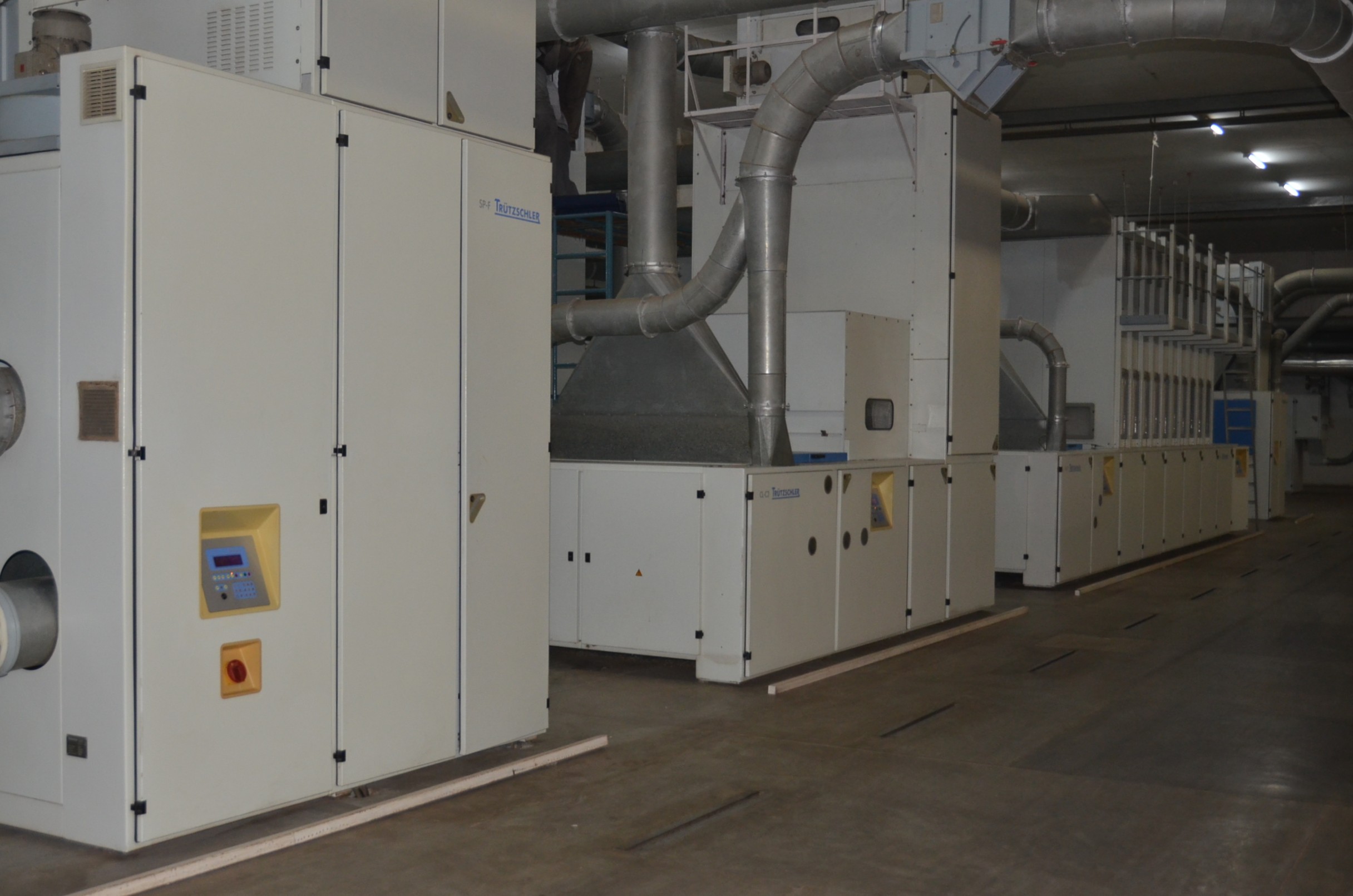
Our facility features a total of 4 blowroom lines; two lines dedicated for cotton and two lines for polyester. Both are manufactured by Trützschler. The objective of the blowroom is to prepare the fibre by opening, cleaning and mixing the cotton fibres in a relatively homogeneous mixture for the subsequent stages of the spinning process. Contamination control for cotton at this step is handled by our USTER Jossi Vision Shields and Magic Eye contamination remover; one for each cotton line.
Carding and Combing
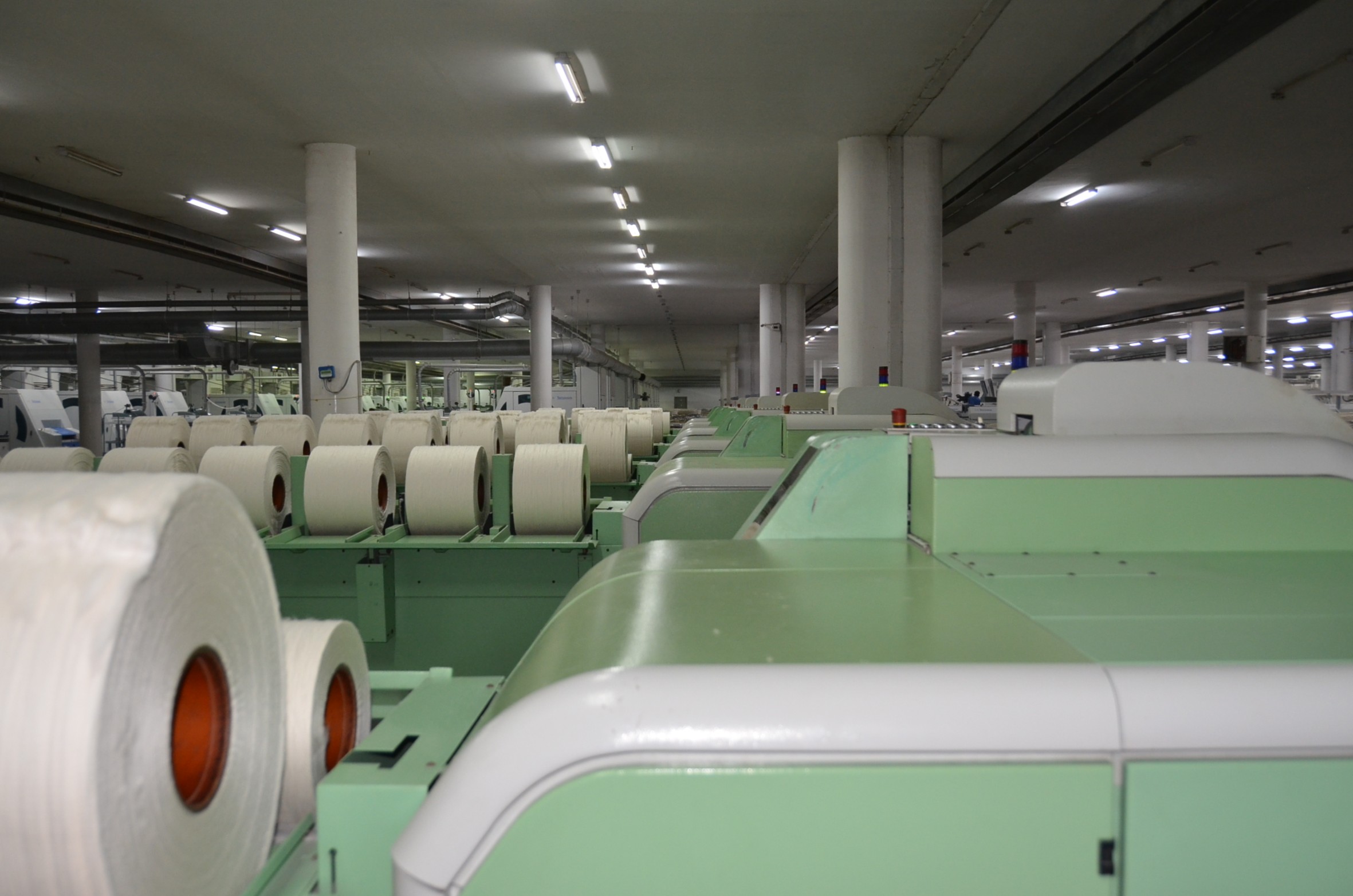
After passing through the blowroom, fibres are passed onto the drawing and carding stages. AA Spinning Mills uses carding machines from Trützschler with a seperate set reserved for each polyester and cotton with a total of 46 machines. Carding machines align the staple fibres into a uniform direction into a continuos untwisted strand of fibers called a sliver.
These slivers can be passed onto the next stage directly or, as is often in the case with cotton staple fibres, be passed to a lap roller which bundles the slivers into a larger sheet of slivers that are wrapped and passed to a comber which pulls out any uneven fibres using fine steel needles to achieve a sliver that is even more uniform.
Combed slivers are often used in manufacturing finer, stronger and high quality yarn. At AA Spinning Mills, we use a total of 6 combers manufactured by both Rieter and Marzoli. These are all fed laps using a Marzoli Lap former.
Drawing
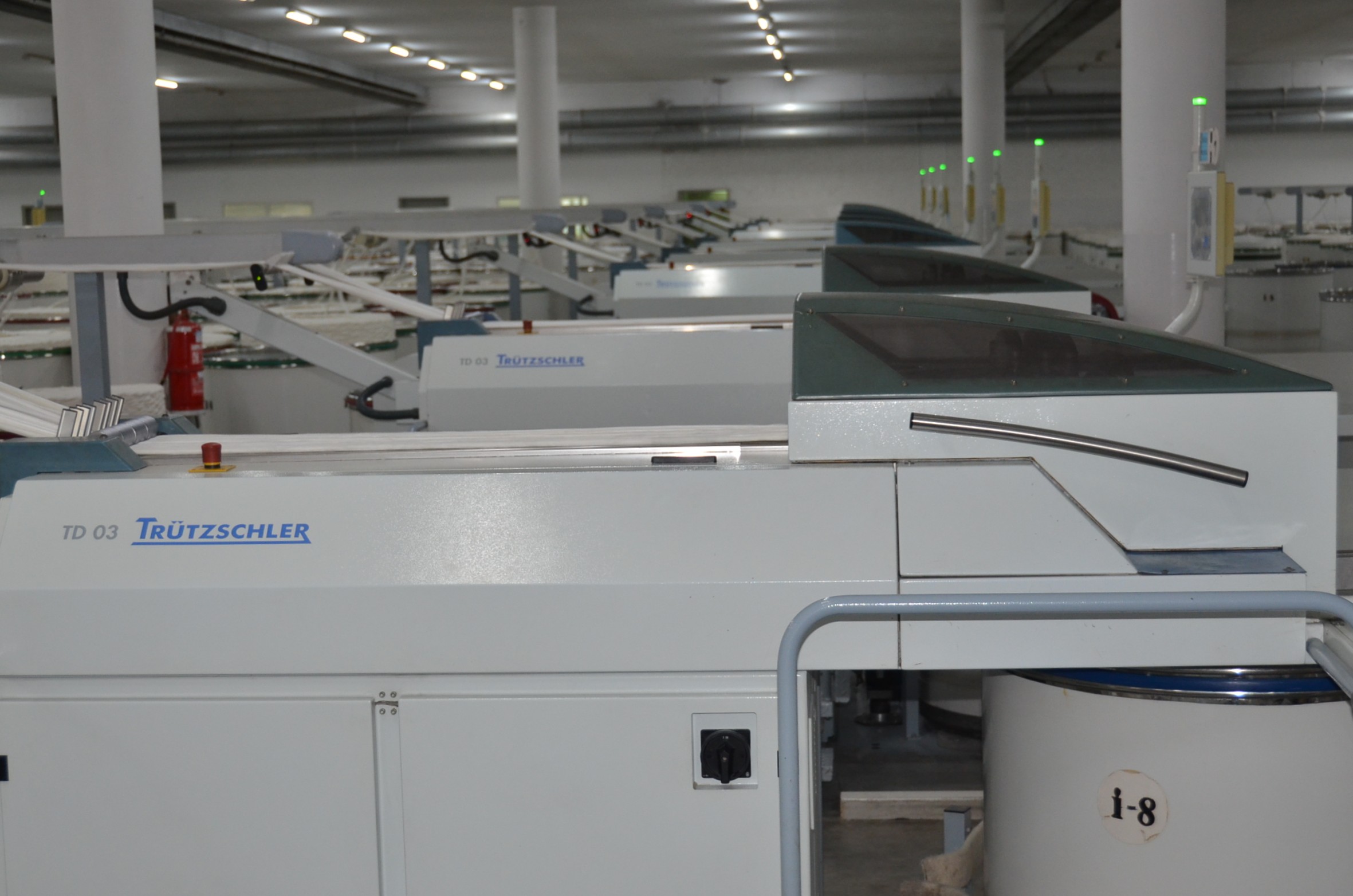
The drawing process serves to both increase uniformity, strength, and fibre alignment by running several strands of sliver through several drafting rollers rotating at increasingly faster speeds. This causes the fibres to be stretched aligned and blended together yielded a overall better product. Using slivers of diferent fibres such as polyester, viscose, cotton and rayon in different ratios produces different blends of yarn of varying properties when used in the spinning process.
At AA Spinning Mills, we have 60 drawing frames from Trützschler producing the wide variety of blends that we have come to be known for!
Roving / Simplex
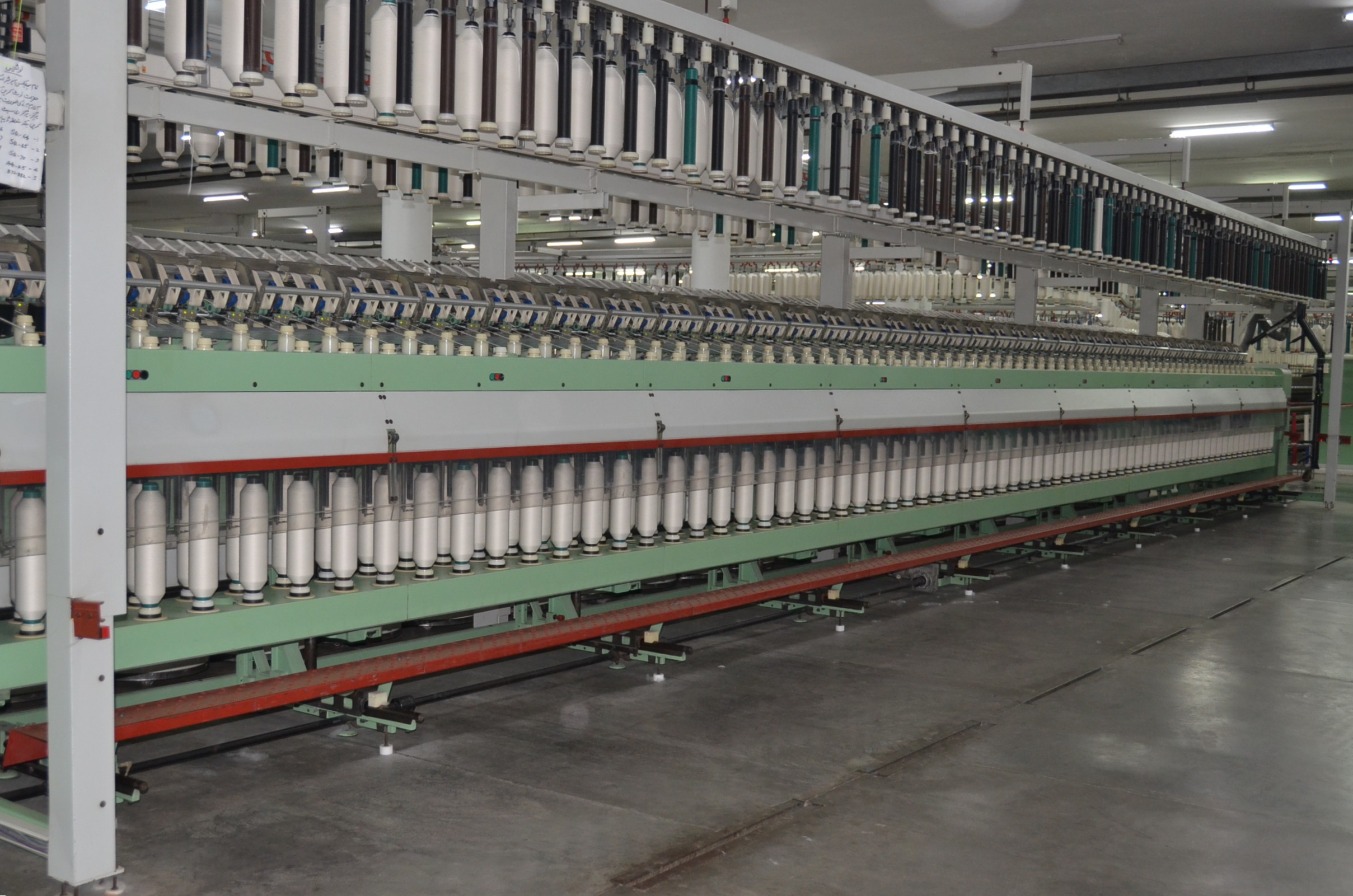
The roving or simplex frame performs the important task of taking the drawn sliver and drafting it down to a slimmer more uniform strant by using drafting rollers combined with a twist. This step serves as a transition stage between the thick slivers produced by the drawing frames and the final steps of ring spinning and winding that yield yarn of the desired count: a value that indicates the fineness or coarseness of a yarn.
At the end of this stage, the sliver is now about the diameter of a pencil and is called roving. At AA Spinning Mills, we employ 14 simplex frames manufactured by Marzoli, each assigned to a different blend of yarn. The roving bobbins produced at this step are what supply the next step of the process, the ring spinning frame.
Spinning
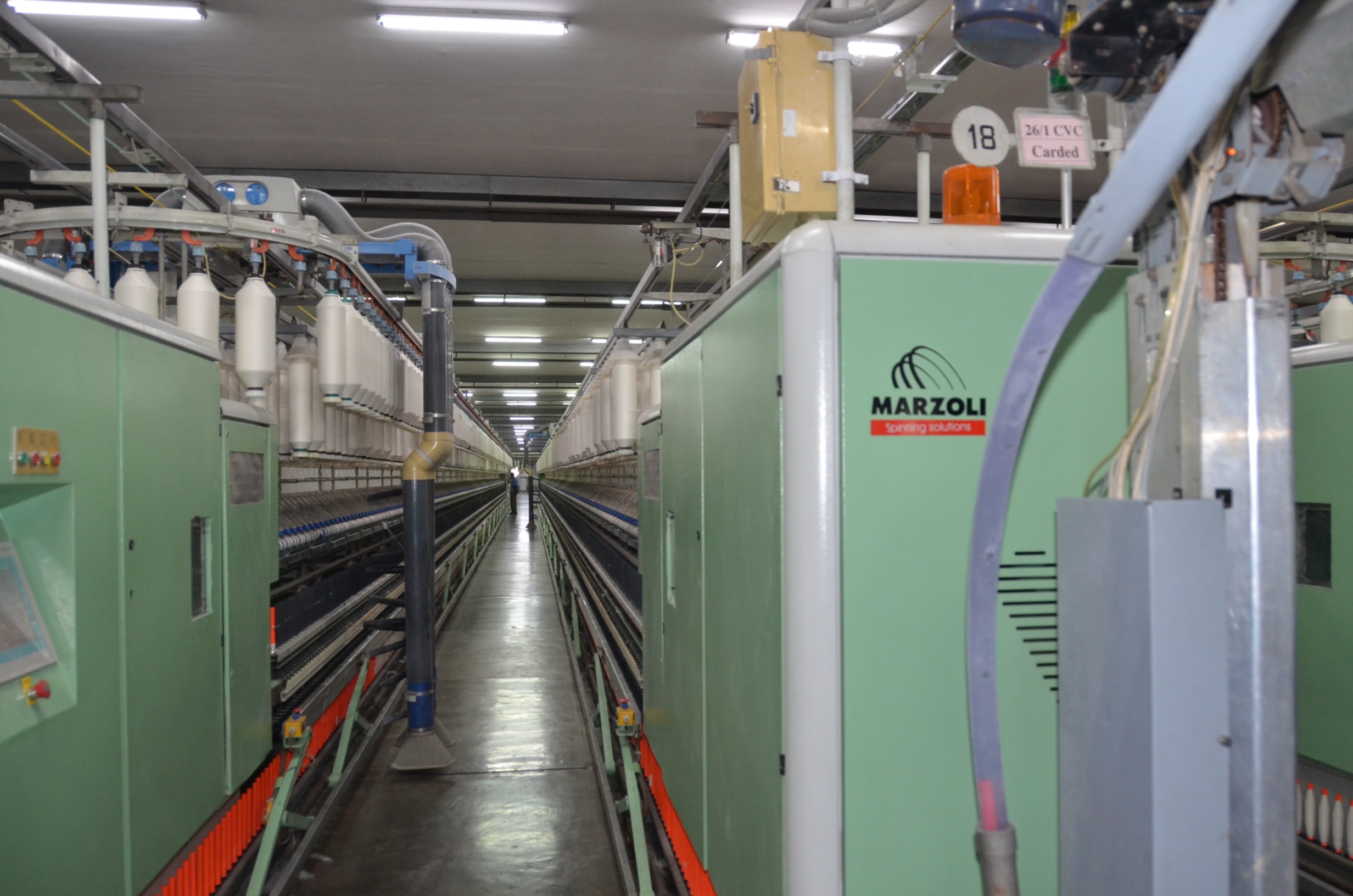
The spinning frame takes our bobbins of roving from the simplex and further transform this loose strand into a high quality final yarn. This is accomplished by drafting and twisting the fibres further until they are ready to be wound onto a smaller bobbin. The rotation of the drafting rollers at this stage help achieve the desired count by stretching the fibres until they reach the required target thickness.
After fibres reach this thickness, they are further twisted by the traveller: a ring rotating at high speeds around the bobbin. As the traveller, completes a single rotation, a single twist is imparted to the section of yarn between the final drafting roller and the traveller. This mechanis also helps maintain the tension to allow the yarn to wind around the bobbin.
Winding
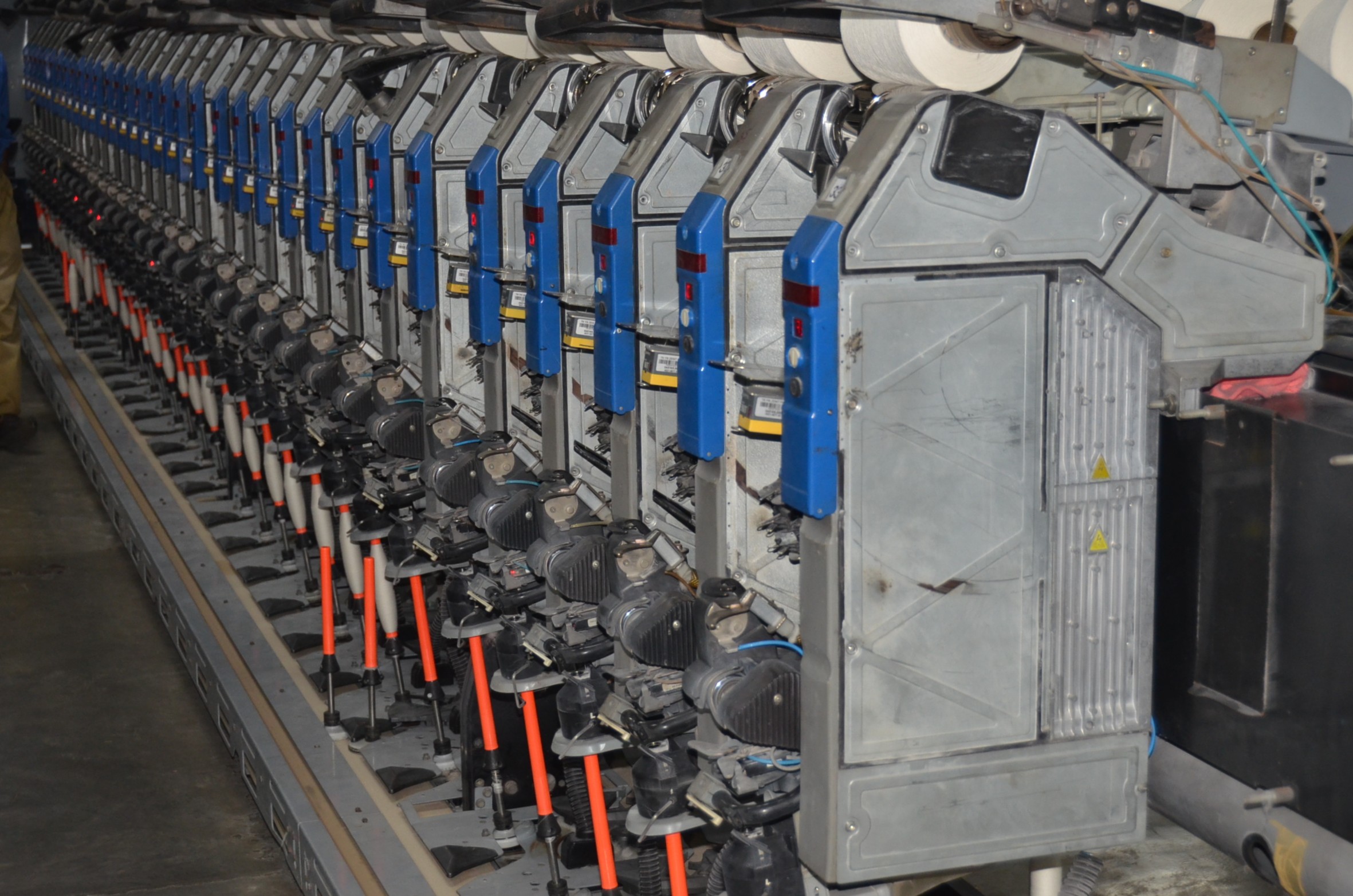
The final stage of the ring spinning process takes our spun wrapped bobbins from the spinning stage and transfers the yarn onto larger packages that are used in textile manufacturing processes such as weaving, knitting and dyeing. During this step, yarn clearers serve as the final quality control step.
Clearers are able to detect faults by measuring differences in diameter and structure and are able to cut the faulty section out. At AA Spinning Mills we employ USTER Quantum yarn sensors to help us ensure our final product is always up to and exceeding the mark to deliver our end customers the best quality.